
The National Stock Exchange index, Nifty, also lost 57.05 points at 4,945.20. Marketmen said fears on interest rates going up mainly pulled down banking stocks while a robust rupee and Infosys lowering guidance for the whole year weighed against the IT stocks.
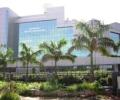
Seventeen coaches will be splashed with the images of Nifty, NSE's flagship index. Inside, important investor awareness messages will be given on panels, with the message being 'invest carefully'.

Extending losses for the fourth straight session, the BSE benchmark Sensex today fell by over 107 points in early trade due to investor concerns, after DMK withdrew its support to the ruling UPA government.

In November last year, the Wipro board had approved the demerger of the non-IT businesses -- Wipro Consumer Care & Lighting (including furniture business), Wipro Infrastructure Engineering (hydraulics and water businesses) and Medical Diagnostic Product & Services business -- into a privately- held company to be named 'Wipro Enterprises Ltd'.
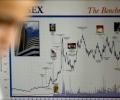
Nifty has a virtual monopoly in the index derivatives segment.

n the broader market, both the BSE Midcap and Smallcap indices, were up 1.2% and 0.7% each.

Sundararaman Ramamurthy has been an interesting choice for the publicly-listed BSE, which has seen its chief move to bigger rival -- the National Stock Exchange (NSE) -- in July. Having spent nearly two decades at the country's largest bourse, Ramamurthy is among the early architects of NSE and understands all the cogs of the exchange wheel like only a few others in the country. Just like NSE's core team, which includes its founder RH Patil, the 59-year-old Ramamurthy has worked at the Industrial Development Bank of India (IDBI) before moving to NSE in 1995.

Market experts say booking profits could be unwise. If you are nervous, go for dividend-yield stocks.

In May, MFs were the net sellers in several PSUs, as they deployed Rs 47,600 crore in equities during the month.
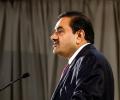
In the context of market integrity, the IRAI and RBI should go over the minutes of the LIC and SBI board meetings when the decisions to invest in Adani equity or debt were taken, notes Jaimini Bhagwati, former World Bank treasury professional.
Investors on Friday became richer by over Rs 1 lakh crore, with benchmark Sensex witnessing 460-point rally amid easing concerns over the US tapering.

Asian Paints was the top gainer after the paints major posted robust first quarter earnings.

Besides investors booking profits at higher levels, a weak earning by JSPL triggered selling.

Index heavyweights were the top losers along with bank shares.

The wide-based NSE sensitive index is currently hovering around 7,900.

Equity benchmark indices Sensex and Nifty hit their all-time high levels on Friday helped by impressive GDP data and fresh foreign fund inflows. Also, a rally in global markets added to the positive momentum in the equity markets. The 30-share BSE Sensex jumped 1,139.04 points to 73,639.34 -- its all-time peak -- in the late afternoon trade.

Thus far in FY21, BSE, NSE have rallied 70 per cent and 71 per cent, respectively.
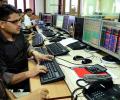
From the Sensex pack, Mahindra & Mahindra climbed 3.71 per cent after the company reported an 18 per cent jump in its consolidated profit for the March quarter and the highest-ever annual profit of Rs 10,282 crore in FY23. Titan, Tata Steel, HDFC, UltraTech Cement, State Bank of India, ITC, IndusInd Bank, NTPC, HDFC Bank and Bajaj Finserv were the other major gainers. HCL Technologies, Power Grid, Maruti, Wipro, Tata Consultancy Services, ICICI Bank, Infosys, Tech Mahindra and Hindustan Unilever were the laggards.

Bank Nifty has recovered nearly 300 points at 10,968 from intra-day low of 10,669 touched in early morning deals.

The Sensex soared 402 points higher to end at 25,720 and the Nifty surged 130 points to close at 7,819.

Axis Bank was the top gainer in the Sensex pack, surging around 5 per cent, followed by HDFC twins, ICICI Bank, Bajaj Finance and SBI. NSE Nifty zoomed 274.20 points to end at 14,982.
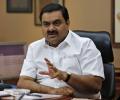
Adani Enterprises became the fourth listed company of Gautam Adani Group to cross Rs 4 trillion market capitalisation (market cap), as the stock hit a new high on the BSE in Tuesday's intra-day trade. At 01:24 pm; with Rs 4.04 trillion market cap, Adani Enterprises stood at number 15th position in overall market cap ranking on the BSE, data shows. Adani Transmission is at top of the group companies list, with market cap of Rs 4.48 trillion, followed by Adani Total Gas (Rs 3.96 trillion), and Adani Green Energy (Rs 3.72 trillion).

ITC, Sun Pharma, Maruti, M&M, Tata Motors, HCL Tech, Wipro, Infosys, HUL, Bharti Airtel and Reliance were among the major losers. Kotak Bank rose the most by 1.59 per cent, followed by IndusInd Bank, Bajaj Finance and Bajaj Finserv. L&T, SBI, TCS and HDFC Bank also closed higher.

'We are cautious only on sub-sectors that have seen massive melt-up during the past six months.'

'Earnings will be the catalyst for markets to march higher from here on out.'
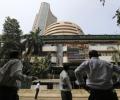
Yes Bank was the biggest gainer in the Sensex pack, rallying 4.06 per cent. Other gainers were Coal India, Infosys, PowerGrid, Vedanta, Reliance, TCS, HUL, ONGC, HCL Tech, IndusInd Bank, HDFC Bank and Asian Paints, gaining up to 2.72 per cent.

'The market should maintain optimism on the back of range-bound oil prices, a robust fiscal balance sheet, a better-than-expected monsoon, and moderating inflation.'

Mixed global cues and decline in crude oil prices further dent the sentiments.

FY16 saw the highest number of new product launches in a year from Maruti

Thereafter, the circuit triggers would be determined as per Sebi's latest direction of daily calculation.
The National Stock Exchange, the country's largest bourse, entered a strategic relationship with CNBC-TV18 under which the latter would broadcast trading and other trading related information live through its channels.
The 30-share BSE Sensitive index or Sensex slipped below 13,000-mark. At 1450 hrs, Sensex was down 526 points at 12,936. a loss of almost 4 per cent compared to Thutsday's close.

Bajaj Finance was the top laggard in the Sensex pack, slumping over 10 per cent, followed by M&M, Titan, Hero MotoCorp, ICICI Bank and Tech Mahindra. On the other hand, L&T, Bharti Airtel, IndusInd Bank, UltraTech Cements and NTPC were among the gainers.

The regulator is unhappy with the exchange in the market crash case that occurred in 2012.

Shrinking inflows and surging outflows on account of profit-booking has curtailed mutual fund (MF) investments in equities since April. The total investments made by equity MFs during the first three months of 2023-24 stands at just Rs 2,980 crore, compared with an average monthly investment of Rs 14,500 crore in 2022-23, reveals data from the Securities and Exchange Board of India. "We are seeing signs of moderation in non-systematic investment plan (SIP) contribution, which has impacted domestic fund inflows in recent months to some extent," says Kunal Vora, head-India equity research, BNP Paribas.
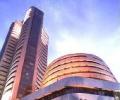
Bank Nifty closes at a 30-month high; Rate sensitives lead the rally on RBI rate cut optimism.

Among the Sensex 30 stocks, new entrant Sesa Goa soared 22 per cent to Rs 187, while TCS rose 11 per cent to Rs 2,023.

'The risk is in not being invested and missing out on an upmove.'
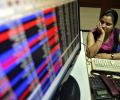
Though the markets have lost ground since the past few sessions, analysts do not seem worried.

At the outset, decide whether you want to be a trader or an investor, suggest Sarbajeet K Sen and Sanjay Kumar Singh.
